
Home Buying Is Getting More Affordable | San Antonio Real Estate
It’s Getting More Affordable To Buy a Home
There’s finally a little good news for anyone who’s been priced out or sitting on the sidelines.
Buying a home is getting more affordable.
Monthly payments have started to come down, and the squeeze buyers have been feeling for the past few years is slowly loosening. Now, that doesn’t mean everyone can suddenly afford a home, but with how tough the market’s been, the improvement we’re seeing matters.
Affordability Is Finally Moving in the Right Direction
One of the best ways to see this shift is by looking at how much of a household’s income it takes to buy a home.
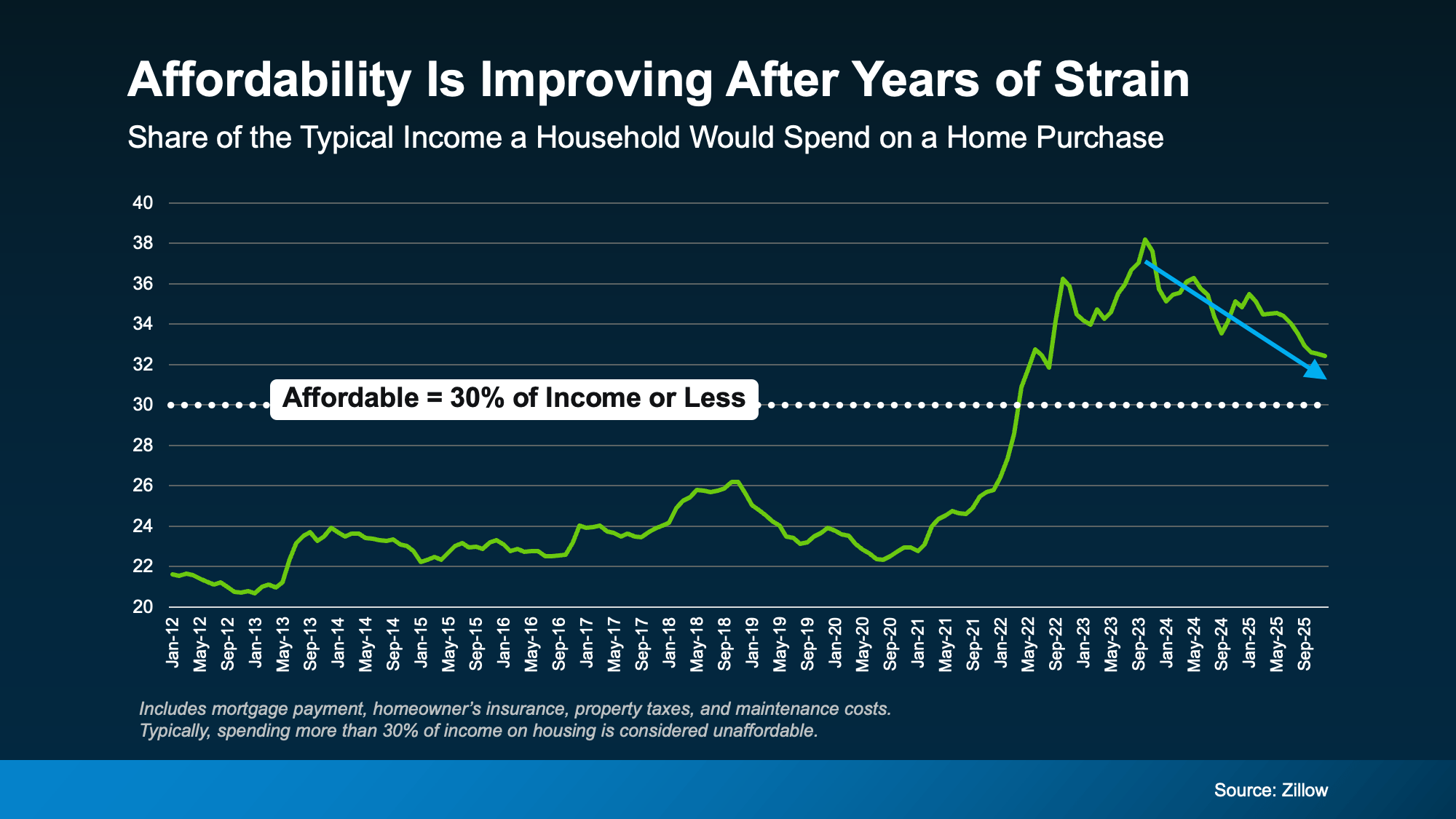
According to Zillow, housing is typically considered affordable when it takes 30% or less of your monthly income to cover your expenses. That includes your mortgage payment, taxes, insurance, and basic maintenance.
For the past few years, the math was well above that threshold, and it made buying a home unachievable for many. But now, we’re slowly moving back toward a balance. Zillow research shows it’s taking less of a typical household’s income to buy a home than it did just a few years ago (see graph below):
Affordability Is Finally Moving in the Right Direction
One of the clearest ways to measure affordability is by looking at how much of a household’s income it takes to own a home.
According to Zillow, housing is typically considered affordable when total housing costs—your mortgage payment, property taxes, insurance, and basic maintenance—consume 30% or less of monthly income.
Over the past few years, that number climbed well above the threshold, pushing many buyers out of the market. But that trend is starting to reverse.
Zillow data shows that it’s now taking less of a typical household’s income to buy a home than it did just a few years ago. While we’re not fully back to the 30% benchmark yet, affordability is clearly moving in the right direction.
Why Buying a Home Is Becoming More Affordable
Mortgage rates get most of the headlines—and they do matter—but they’re not the only reason affordability is improving. Three key forces are working in buyers’ favor right now:
1. Mortgage Rates Have Eased
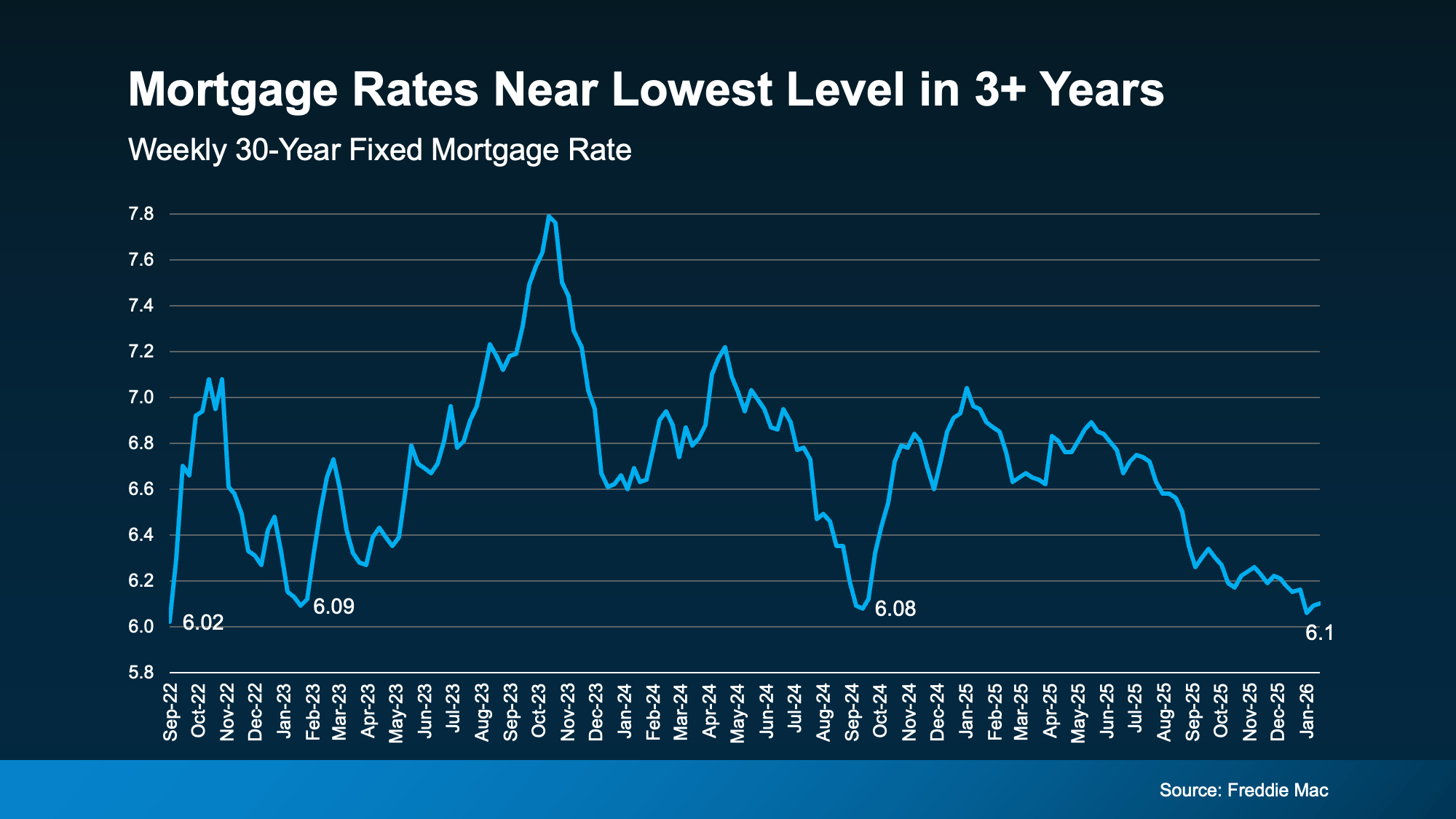
Rates are hovering near their lowest levels in more than three years. Even small rate improvements can have a meaningful impact on monthly payments, especially in higher-priced markets.
2. Home Price Growth Has Slowed
Home prices aren’t falling across the board, but they’re rising far more gradually than they were a few years ago. That slower pace helps buyers avoid sudden jumps in purchase prices and makes planning more predictable.
3. Wages Are Growing Faster Than Home Prices
This factor is often overlooked, but it’s critical. As Mark Fleming, Chief Economist at First American, explains:
“When income growth exceeds house price growth, house-buying power improves—even if mortgage rates don’t decline meaningfully.”
Taken together, these trends explain why the math is starting to work a little better for buyers than it did even a year ago.
Fleming sums it up well:
“Affordability remains challenging, but for the first time in several years, the underlying forces are finally aligned toward gradual improvement… Affordability won’t snap back overnight, but it’s now sailing in the right direction.”
Economists expect these dynamics to continue into 2026.
Where Homes Are Becoming More Affordable First
Affordability isn’t improving at the same pace everywhere.
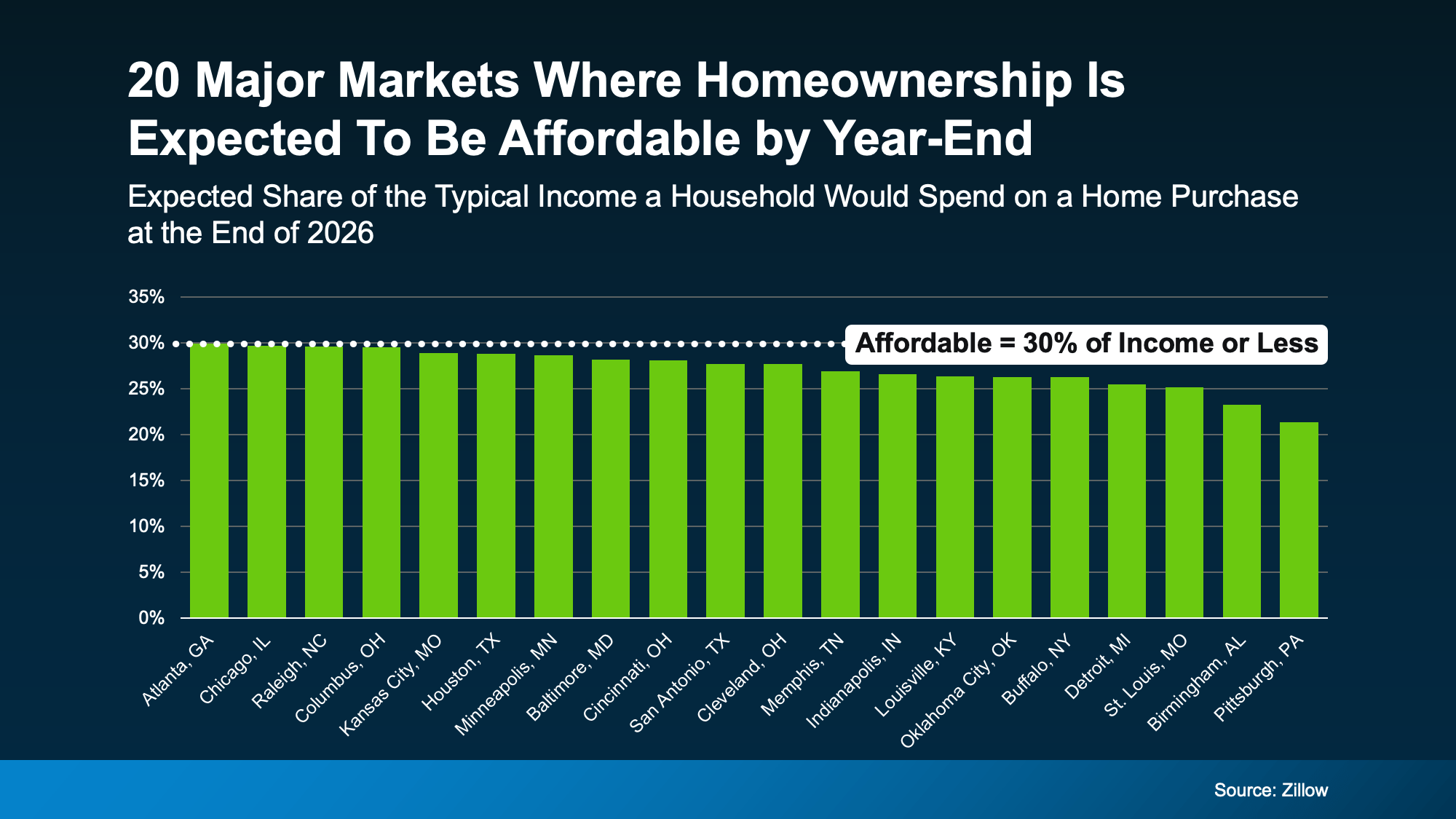
Zillow projects that some markets will fall back under their affordability threshold (30% of income or less) by the end of the year. But that doesn’t mean you have to live in one of those cities—or wait—to take advantage of improving conditions.
Many local markets are already seeing meaningful progress.
As someone working closely with buyers and sellers across San Antonio (78255, 78257), Fair Oaks Ranch, Boerne, and the Hill Country, I see how these national trends show up differently at the neighborhood level. Inventory, price points, and competition vary block by block—and understanding those nuances is what helps buyers decide when and where affordability actually works.
Now, we’re not all the way back to Zillow’s threshold of 30% of your income or less, so affordability is still tight. But things are trending in the right direction.
Why Affordability Is Improving
So, what’s driving the change? A lot of the focus lately has been on mortgage rates and how much they’ve come down over the course of the past year. But that’s not the only factor working in favor of buyers right now. Here are three trends benefiting buyers today:
1. Mortgage rates have eased. Rates are near their lowest level in more than three years, which helps lower monthly payments (see graph below):
2. Home price growth has cooled. Prices aren’t falling nationally, but they’re growing much more slowly than they were a few years ago. That means buyers today aren’t facing the same sharp jumps in purchase prices, which helps keep monthly payments more manageable – and buying more predictable.
3. Wages are growing faster than home prices. This one matters a lot. As Mark Fleming, Chief Economist at First American, explains:
“When income growth exceeds house price growth, house-buying power improves—even if mortgage rates don’t decline meaningfully.”
None of this makes buying cheap, but it does explain why the math is starting to work a little better for buyers than it did even a just a year ago. Put simply, the forces that hurt affordability over the past few years are finally easing. Fleming again explains it well:
“Affordability remains challenging, but for the first time in several years, the underlying forces are finally aligned toward gradual improvement. Mortgage rates may drift down only slowly, but income growth exceeding house price appreciation will provide a boost to house-buying power — even in a higher-rate world. Affordability won’t snap back overnight, but like a ship finally catching a steady tailwind, it’s now sailing in the right direction.”
These three factors combined are why economists expect affordability to keep improving in 2026.
Where Homes Are Becoming Affordable First
But how much is affordability really going to improve? In some places, noticeably. Zillow says some markets are expected to fall back under their affordability threshold (30% of your income or less) by the end of the year:
Bottom Line
For the first time in quite a while, buying a home is becoming more affordable. That’s a meaningful shift.
And because affordability isn’t improving evenly across all markets, understanding what’s changing locally is what really makes the difference.
If you’d like to see how today’s affordability trends affect your buying power—and what that means for homes in your preferred areas—I’m happy to talk it through with you. Sometimes the opportunity is closer than it looks.
Common Buyer Questions Right Now
Is it easier to buy a home now than last year?
For many buyers, yes. Lower rates, slower price growth, and rising wages have improved overall buying power.
Will affordability continue improving in 2026?
Most economists expect gradual improvement, though changes will vary by market and price range.
Should I wait to buy or explore options now?
That depends on your financial situation and local conditions—but many buyers are finding that acting now gives them more flexibility before competition increases.
Categories
Recent Posts



GET MORE INFORMATION